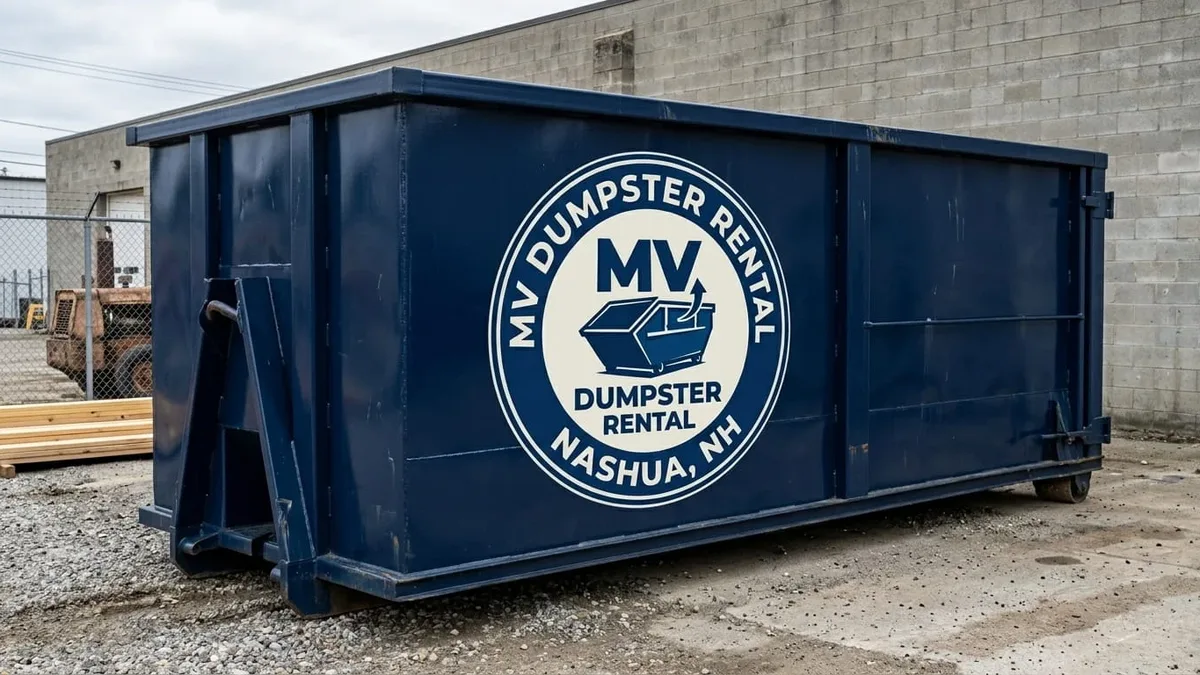
Whether you’re a contractor running a multi-week job or a homeowner tackling a DIY remodel, construction and demolition debris fills a dumpster differently than an ordinary household clean-out does. It’s heavier for its volume, it often shows up all at once as a crew tears through a phase of work, and getting the size right up front saves you from a mid-project swap. Here’s how we think about it.
Sizing for Heavy Material: Why Weight Comes First
Concrete, brick, dirt, and masonry debris are dense enough that a container can hit its weight allowance long before it looks full. This trips up more construction projects than people expect — a load of broken concrete that only covers the floor of the container can already be at the weight limit, while the same box would have plenty of room left for lighter material like drywall or lumber. For a pure concrete, brick, or masonry load, a smaller container is often the right call even though it looks “too small” sitting empty on the driveway. Our concrete & heavy debris page covers how we size these loads specifically, and our general dumpster sizing guide walks through the weight-versus-volume trade-off in more detail.
What’s Typically Allowed on a Construction Site Roll-Off
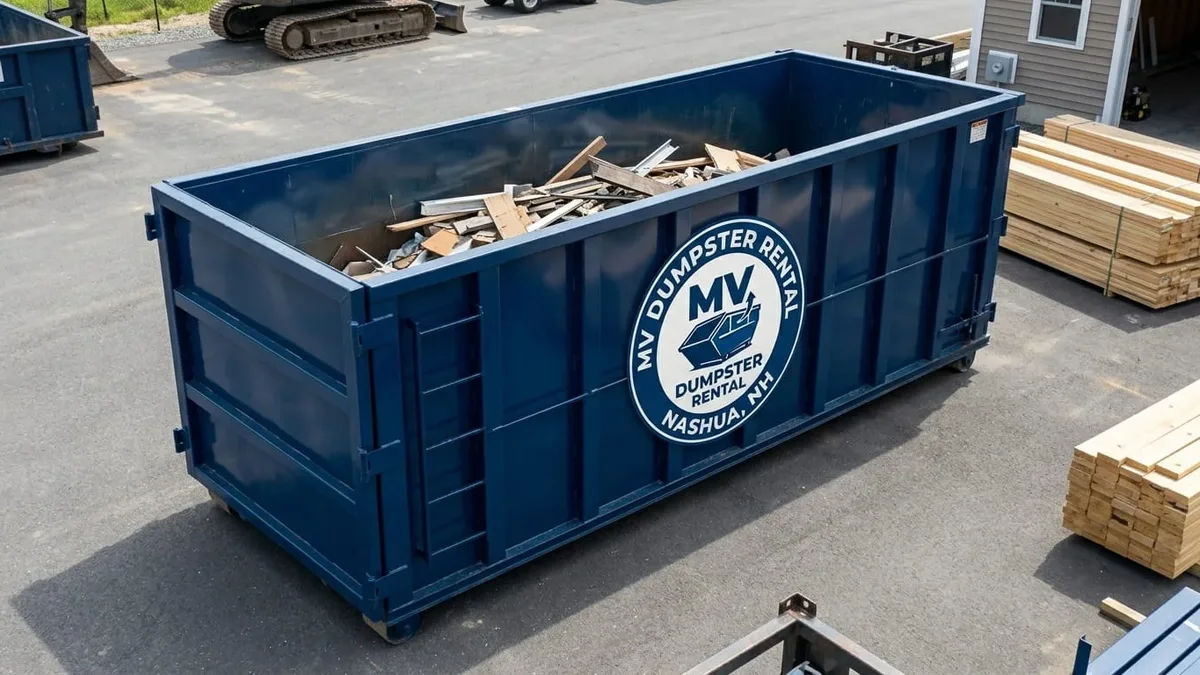
Most of what comes off a job site goes in without an issue: framing lumber, drywall, packaging, general demolition material, and roofing debris from a tear-off all fill our containers regularly. See our demolition debris page for general tear-down material, and our roofing dumpster rental page and roofing tear-off sizing guide if shingles are part of the job. Concrete, brick, and other masonry debris are handled as their own category given how quickly they add weight — see the concrete & heavy debris page above.
What Doesn’t Go In
A few categories are off-limits on any job site dumpster. Asbestos is never permitted in a roll-off, no exceptions — older buildings with suspected asbestos in siding, tile, or insulation need licensed abatement instead. Paint, fuel, motor oil, and other chemicals left over from a job also need proper hazardous-waste disposal rather than going in the container. And if your crew runs cordless tools, keep an eye on spent battery packs: as of July 1, 2025, New Hampshire bans disposing of rechargeable lithium-ion batteries — including the packs inside cordless power tools — in the trash, landfill, or incinerator, for both households and businesses. A damaged battery pack is a genuine fire risk in a collection truck, so route dead tool batteries through a certified recycler, Call2Recycle, or a participating retailer rather than tossing them in with the debris. Our full guide to what can and can’t go in a dumpster covers the rest of New Hampshire’s disposal rules.
Choosing the Right Size for a Job Site
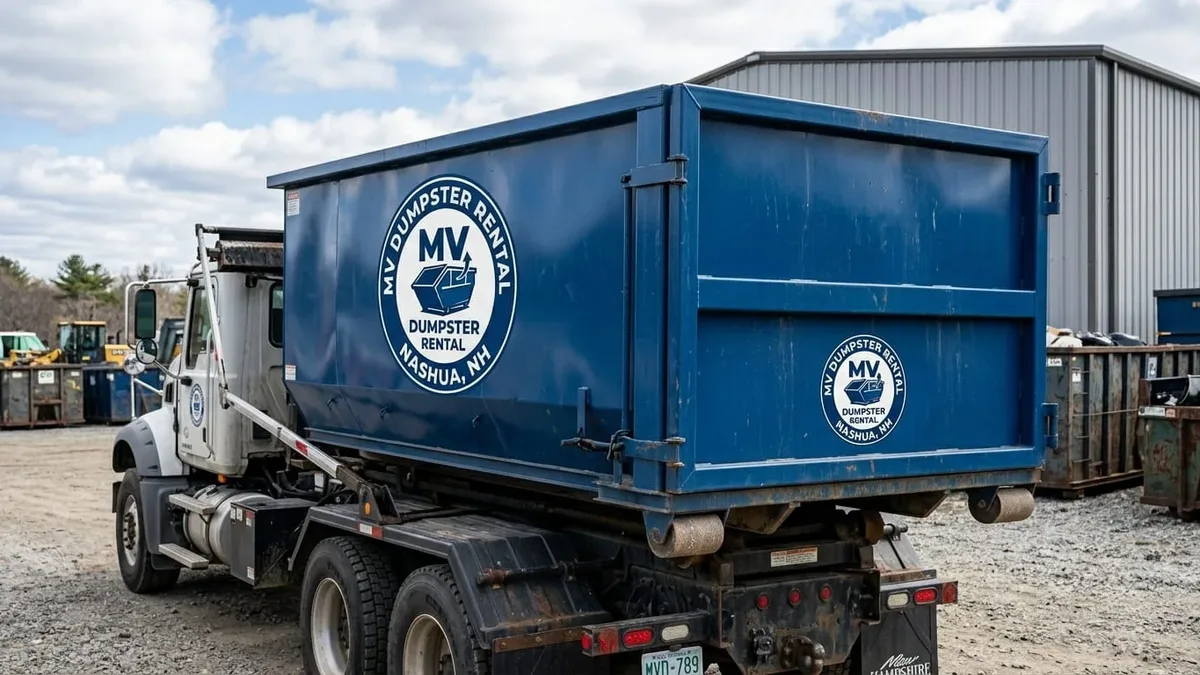
For a mixed load of lighter construction debris — drywall, lumber, packaging — our 30-yard and 40-yard dumpsters are the usual choice for a multi-week job, since they hold enough volume that a crew isn’t coordinating a swap mid-project. For dense, weight-heavy material like concrete or brick, a 10 or 15-yard often makes more sense once the weight allowance is factored in. If your project is a mix of both — framing debris plus a slab removal, say — it’s worth describing the full scope on the phone so we can recommend a size, or in some cases more than one container, that matches the actual job.
Permits for Job-Site Placement
Placement entirely on the job site itself — a driveway, yard, or lot you’re working on — never requires a permit anywhere in our service area. If the container needs to sit in the street or right-of-way instead, that goes through the town the project is in, whether that’s Nashua’s Board of Public Works or another town’s own select board or public works department. See our full Nashua dumpster permit guide for how that breaks down town by town.
Scheduling Around Winter Weather
Job sites across the Merrimack Valley slow down in winter for the same reason clean-up work picks up — ice storms and nor’easters, roughly December through March, bring heavy ice accumulation, downed limbs and lines, and hazardous roads. If your project timeline runs through the winter months, it’s worth building some flexibility into your delivery schedule. Our ice storm dumpster rental guide covers the seasonal pattern in more detail, including how storm clean-up debris tends to spike demand right after a bad stretch of weather.
Get a Quote for Your Job Site
Construction debris varies enough job to job that we quote every project by phone with a flat rate, rather than publishing a generic price online. Tell us the scope — what’s coming out, how heavy it leans, and how long you expect the container to sit — and we’ll recommend a size and give you a number on the call. Call MV Dumpster Rental Nashua at (603) 704-3257, or see our construction dumpster rental page for the full service.