Most people size a dumpster by picturing how much stuff they have. For a kitchen remodel or a garage cleanout, that works fine. For a roofing tear-off, it doesn’t — a stack of torn-off shingles takes up surprisingly little visual space for how much it actually weighs. Asphalt shingles are dense, and a full tear-off down to the deck can generate a genuinely heavy load even on a modest-sized roof, especially if there are multiple layers stacked on top of each other from past reroofing jobs. Getting the size right for a roofing job means thinking in terms of roofing squares and layers first, and container volume second.
Start With Squares, Not Square Footage of the House
Roofers measure roofs in “squares” — one square covers 100 square feet of roof surface. When you call to book, the single most useful number you can give us is the roof size in squares (your roofing contractor will know this, or can measure it) and how many layers of shingles are coming off. A single-layer tear-off on a small to mid-sized roof is a very different load than a double-layer tear-off on a large roof, even if the square footage sounds similar on paper. Tell us both numbers and we’ll size the container around the actual weight you’re about to generate, not just the roof’s footprint.
Why Layers Change Everything
A lot of older homes around Nashua and the surrounding towns have been reroofed at least once without a full tear-off — a second layer of shingles installed right over the first. That’s common, and it’s fine for the roof itself, but it roughly doubles the weight coming off when a full tear-off finally happens. If your contractor mentions there’s more than one layer up there, pass that along when you book. It’s the single biggest factor in getting the right size and avoiding a container that fills to its weight limit well before it looks full.
Which Size Fits a Roofing Job
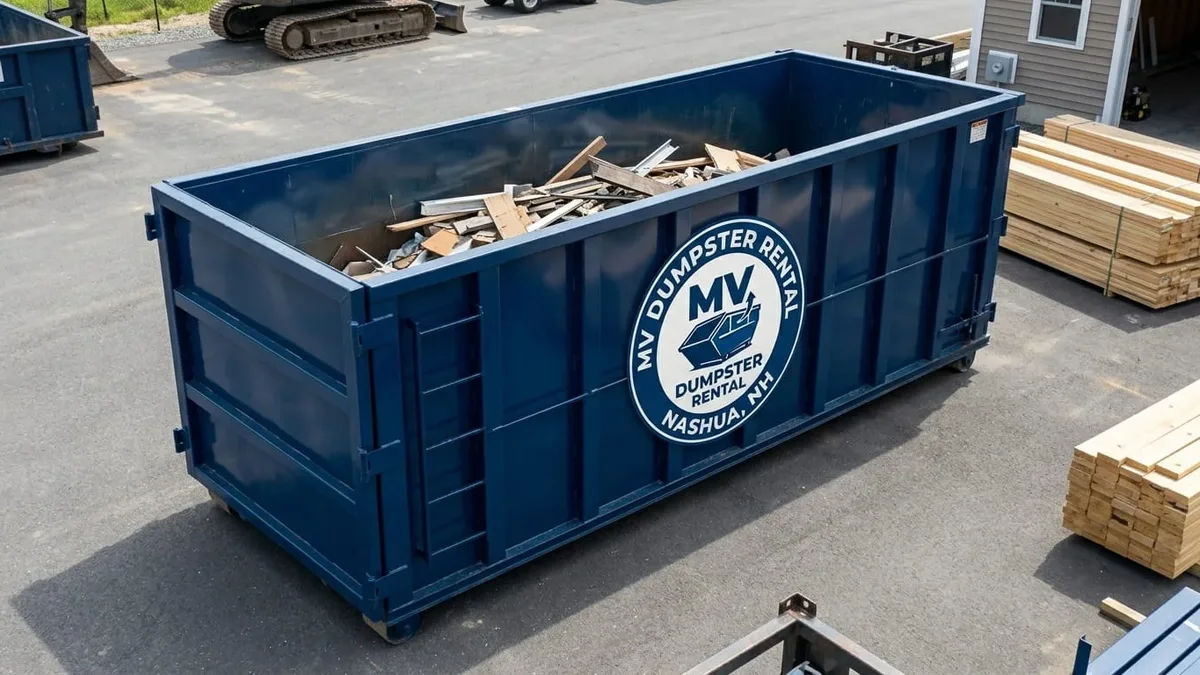
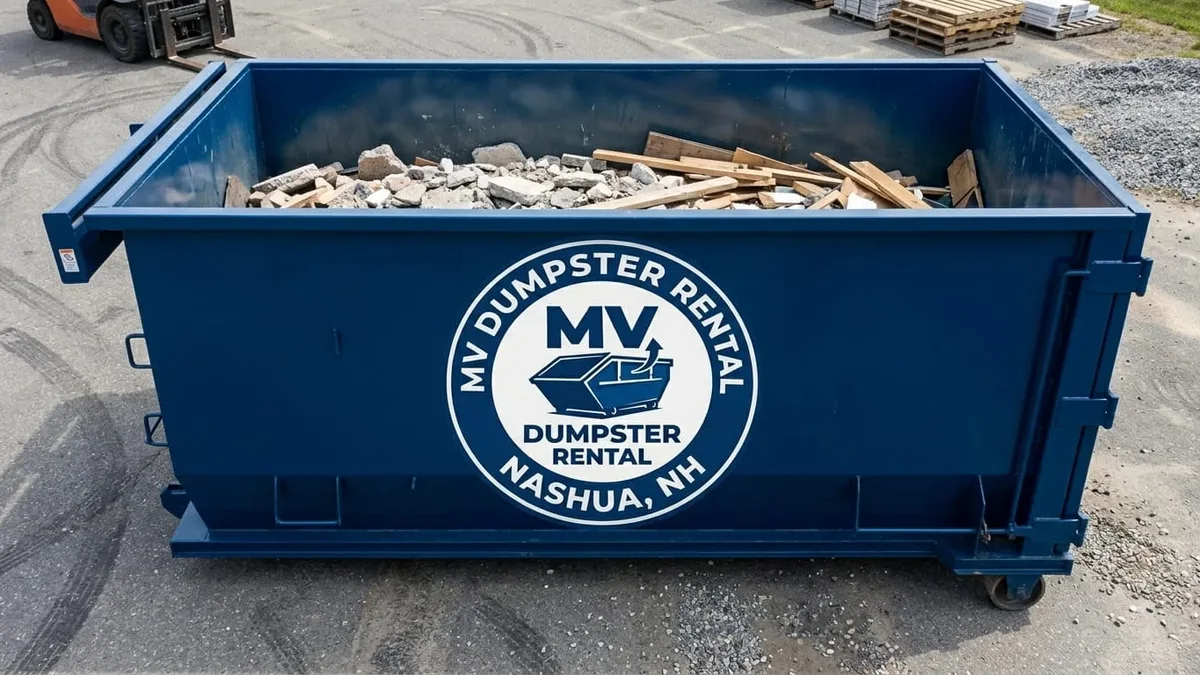
Most straightforward, single-layer roofing tear-offs on an average home fit well in a 20-yard dumpster. Larger homes, steeper roofs with more surface area, or any tear-off involving multiple layers tend to push toward a 30-yard dumpster instead — not because the volume needs it, but because the weight does. This is a case where guessing based on “how big is my house” can lead you astray; describing squares and layers on the phone gets you a much more reliable size than eyeballing it. Our general sizing guide covers how the full lineup compares if you want the broader picture beyond roofing specifically.
Loading a Roofing Dumpster the Right Way
Because weight is the real constraint on a roofing job, how the material goes into the container matters more than it does for a typical junk load. Spreading shingles evenly across the floor of the container, rather than piling them high in one corner, helps keep the load balanced and makes it easier to gauge how much room and weight capacity is left as the tear-off progresses. If the job includes old underlayment, flashing, or damaged decking boards alongside the shingles, that all counts toward the same load — let us know if decking or structural material is coming off along with the shingles themselves, since that can change the size conversation too.
What Else Comes Off a Roof
A tear-off is rarely just shingles. Old flashing, vent boots, ridge caps, damaged plywood decking, and the underlayment beneath the shingles typically come off together and all go in the same container. None of that changes what’s allowed in the box, but it does add to the weight tally, so mention it up front rather than assuming it’s a minor add-on. If the job also involves gutters, siding, or other exterior work beyond the roof itself, our construction dumpster rental and demolition debris services cover that broader scope.
Placement for a Roofing Job
Roofing tear-offs usually mean debris coming down close to the house, which makes driveway placement close to the structure the most practical setup — right where a dumpster on private property needs no permit at all anywhere in our service area. If your property doesn’t have driveway room and the container needs to sit on the street instead, that brings a permit into the picture, and which office handles it depends on the town. Our permit guide covers that by jurisdiction, and it’s worth a quick mention on the booking call either way.
Timing Around Weather
Roofing crews already work around the weather closely, but it’s worth factoring the dumpster into that same planning. Winter ice and snow load add a layer of scheduling risk on top of the usual roofing calendar — our ice storm guide covers how we handle delivery and pickup timing during New Hampshire’s winter months, which is worth a look if your tear-off is scheduled anywhere near that window.
Booking a Roofing Dumpster
Whenever your roofing job is scheduled, call us with the roof size in squares and the number of layers coming off, and we’ll size the container around the actual weight rather than a guess. Call (603) 704-3257, or see our roofing dumpster rental page for more on how we handle these jobs specifically.